









When we think about aging, we often focus on one question: How long will we live? But there’s another question worth asking: How well will we live as we age? Advances in medicine and technology have helped people live longer, but a longer life doesn’t necessarily mean more years spent feeling strong, staying active or maintaining independence. Understanding the distinction between lifespan and healthspan helps explain why healthy aging is about more than simply adding years to life.
What Is the Difference Between Lifespan and Healthspan?
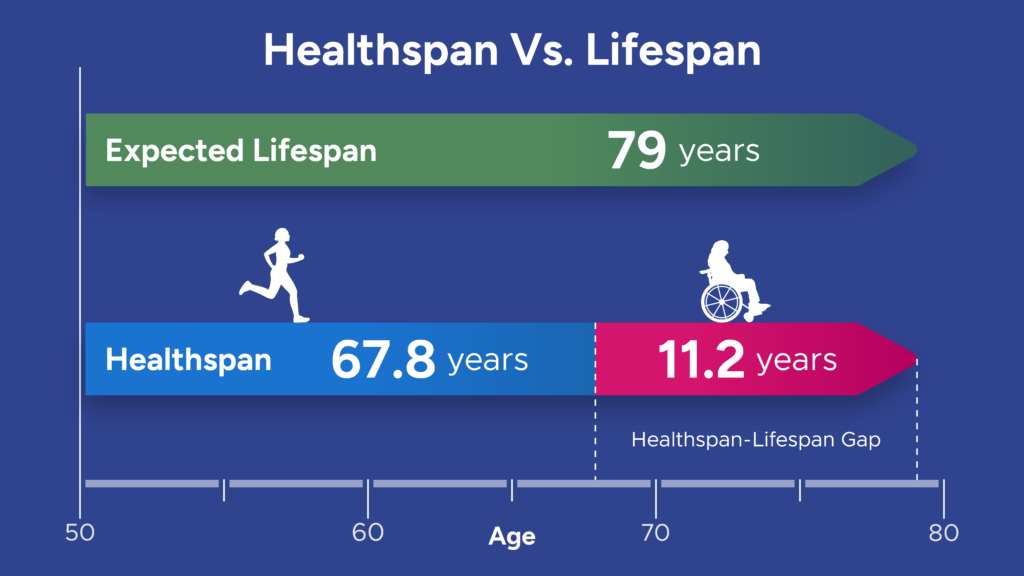
Lifespan refers to the total number of years a person lives. Healthspan refers to the number of years spent in good health, with the ability to remain physically active, mentally engaged, and independent. Ideally, the two would closely align. In reality, many people spend some of their later years managing chronic conditions or experiencing limitations that affect their independence.
In 2024, life expectancy in the United States reached 79 years, according to the CDC. But how many of those years can we expect to spend in good health? According to a 2021 federal health measure, Americans could expect to live about 67.8 years in good health.
While genetics and other factors beyond our control influence how we age, our daily lifestyle habits also play an important role. That’s why healthy aging is increasingly about more than managing illness—it’s about supporting overall health throughout life. The goal isn’t to prevent every age-related change, but to support the conditions that help us remain healthy and active for as long as possible.
A Whole-Person Approach to Healthy Aging
Healthy aging involves more than addressing individual symptoms or focusing on a single health marker in isolation. An integrative approach to health considers how nutrition, movement, sleep, stress, and other lifestyle factors work together to influence overall well-being. This approach helps shift the focus from simply managing problems as they arise to building a foundation for long-term health. Rather than looking for one solution, a few fundamentals can make a meaningful difference and support healthspan.
- Stay active. Regular physical activity supports cardiovascular health, mobility, balance, and muscle maintenance. Resistance training is particularly valuable as we age, when preserving strength becomes increasingly important for everyday function and independence.
- Focus on nutritional variety. A balanced, nutrient-dense diet provides the protein, vitamins, minerals, healthy fats, and other nutrients needed for normal body function and long-term health.
- Prioritize sleep and stress management. Consistent, restorative sleep supports cognitive function, mood, and metabolic health. Managing stress and maintaining social connections also contribute to overall well-being.
- Address individual nutritional needs. Nutrient requirements can change with age, diet, medications, and health status. When a dietary gap or specific need is identified, targeted supplements may help address it. A healthcare professional can help assess dietary intake, identify nutritional gaps, and determine whether supplementation is appropriate.
Think Beyond the Number of Years
Healthy aging starts long before retirement and longevity alone doesn’t tell the whole story. The habits we build throughout adulthood can help lay the groundwork for how we feel and function in the years ahead, and positive changes can be valuable at any age. By taking a whole-person approach to health—one that includes nutrition, movement, sleep, preventive care, and individualized support—we can make more informed choices to support long-term well-being and optimize our healthspan.
References
ODPHP. Life expectancy at birth—in good or better health—OHM-04. Healthy People 2030.
Xu JQ, Murphy SL, Kochanek KD, Arias E. Mortality in the United States, 2024. NCHS Data Brief. 2026;(548):1-14.